How to Get Salon-Style Hair at Home
Achieving salon-quality hair at home requires the right preparation, tools, and techniques. This guide—written from a professional hairdresser’s perspective—covers everything from washing and heat styling to maintenance. We’ll explain each step’s purpose, list recommended products/tools (with examples and prices), and give precise techniques (angles, heat settings, timing) plus troubleshooting and safety tips. We address all hair types (straight, wavy, curly, coily), lengths (short/medium/long), and common concerns (fine, thick, damaged, color-treated, frizzy). We include daily and special-occasion routines, quick fixes, a recommended product comparison table, a 6-month maintenance timeline, and illustrative flowcharts. All recommendations come from stylists’ guides, brand experts, and recent studies, ensuring up-to-date, authoritative advice.
1. Preparation (Wash & Prep)
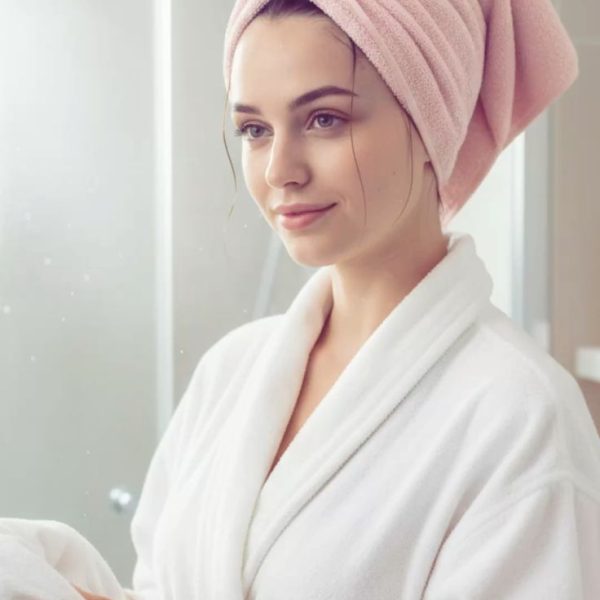
Before styling, wash and prep hair properly. Start with the right shampoo/conditioner for your hair type and concern. For example, use a sulfate-free moisturizing shampoo for dry or color-treated hair, or a clarifying shampoo monthly if product buildup is an issue. Focus shampoo on the scalp to cleanse oils, and apply conditioner mainly to mid-lengths and ends to avoid weighing down roots. A weekly deep-conditioning mask can nourish damaged hair. After washing, gently towel-dry using a microfiber towel or turban to remove excess water without rubbing, which reduces frizz. For example, twist hair up in an absorbent turban for a few minutes, then detangle with a wide-tooth comb or detangling brush (work from ends upward). Next, apply leave-in products: a heat-protectant spray is essential for all hair types to shield strands from heat damage. (For fine hair, use a lightweight spray; for thick hair, a richer cream or oil-based protectant is better.) If your hair tends to frizz or lack volume, add a volumizing mousse or blowout spray at the roots and a small amount of smoothing cream or oil on mid-lengths/ends to tame frizz
After shampooing and towel-drying, apply leave-in products (leave-in conditioner, heat protectant, volumizer) to damp hair. Be gentle when squeezing out water to avoid breakage.
Safety Tip: Never blow-dry or flat-iron soaking wet hair—it causes damage (hair should be ~80% dry). Always start with a lower heat setting if in doubt, and comb carefully to avoid breakage.
2. Trimming and Maintenance
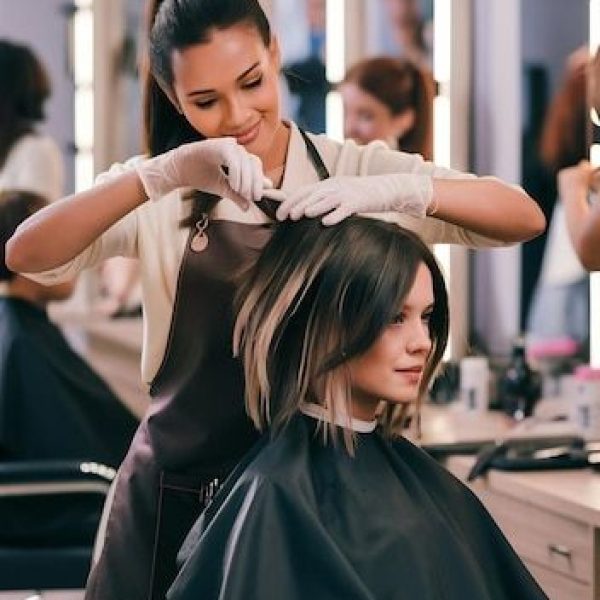
Healthy hair often means trimming split ends. If you maintain medium or long hair, plan trims every 8–12 weeks; short styles may need touch-ups every 4–6 weeks. For a DIY trim, use proper hair-cutting shears (Japanese-steel salon scissors) – never kitchen scissors. Work on dry, clean, detangled hair so you can see the ends clearly. Divide hair into sections and hold each section straight down (0° angle) to avoid unintended layers. Snip off only ¼–½ inch at a time from split ends. If you want an angled front (face-framing), comb a front section diagonally forward and trim along that angle. Always cut conservatively; you can always trim more later. After cutting, comb through and ensure both sides are even.
Tools: Quality scissors cost about $20–$50 (brands like Suvorna or Sally Hansen salon shears). Use a carbon-fiber comb to reduce static when cutting. In our product table below, we include scissors and comb recommendations.
Tip: If you’re not confident cutting layers, it’s safest to leave major reshaping to a stylist. At-home trims should focus on split ends only. And always start with a small amount – you can always cut more, but you can’t glue hair back on!
3. Sectioning
Before styling, section the hair. Working in sections ensures even heat and styling. Use large clips to divide damp hair into 4–6 sections (top, sides, back). Clip up the top layers, starting from the bottom. Work section by section from bottom up. Smaller sections (~1″ wide) will give smoother, longer-lasting style, but if you need volume over precision, use slightly larger sections. For curly or wavy hair, you can often work in bigger sections or use a diffuser (see below).
Flowchart (Routine Workflow): Below is a simplified flowchart for a daily styling workflow. It guides you through washing vs. non-washing days and styling steps:
Tools: Quality scissors cost about $20–$50 (brands like Suvorna or Sally Hansen salon shears). Use a carbon-fiber comb to reduce static when cutting. In our product table below, we include scissors and comb recommendations.
Tip: If you’re not confident cutting layers, it’s safest to leave major reshaping to a stylist. At-home trims should focus on split ends only. And always start with a small amount – you can always cut more, but you can’t glue hair back on!

This workflow chart helps decide whether to wash or refresh hair, then blow-dry or heat-style according to the look you want (straight vs. wavy), ending with finish products to hold and shine.
4. Blow-Drying Techniques
Before styling, section the hair. Working in sections ensures even heat and styling. Use large clips to divide damp hair into 4–6 sections (top, sides, back). Clip up the top layers, starting from the bottom. Work section by section from bottom up. Smaller sections (~1″ wide) will give smoother, longer-lasting style, but if you need volume over precision, use slightly larger sections. For curly or wavy hair, you can often work in bigger sections or use a diffuser (see below).
Flowchart (Routine Workflow): Below is a simplified flowchart for a daily styling workflow. It guides you through washing vs. non-washing days and styling steps:
Tools: Quality scissors cost about $20–$50 (brands like Suvorna or Sally Hansen salon shears). Use a carbon-fiber comb to reduce static when cutting. In our product table below, we include scissors and comb recommendations.
Tip: If you’re not confident cutting layers, it’s safest to leave major reshaping to a stylist. At-home trims should focus on split ends only. And always start with a small amount – you can always cut more, but you can’t glue hair back on!
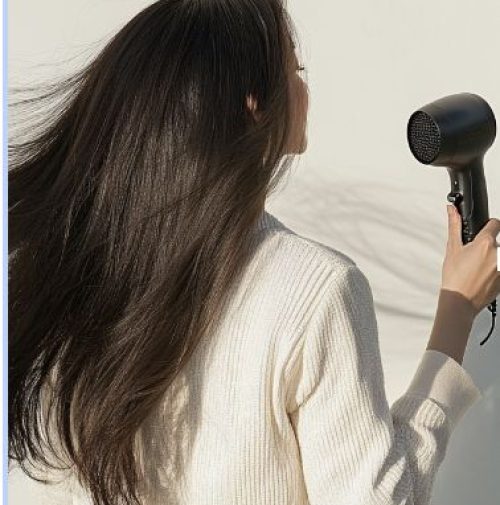
Section hair and blow-dry with a round brush. Use the dryer’s nozzle to direct heat down the hair shaft. Dry one section at a time for smooth, voluminous results.
Technique: Starting with ~80% damp hair, work in sections. Point the dryer downward from roots to ends to smooth the cuticle. For volume, lift the hair at the roots and blow under the section (drying hair “upside down”). Use a round brush: wrap the section around it, then pull it slowly through as you dry. Turn the brush (clockwise or counter-clockwise) as needed to shape the ends. When the ends are dry, roll the brush under and give a blast of cool air to “set” the shape. A concentrator nozzle helps focus airflow; Allure’s pros emphasize using it on each section to seal cuticles for shine.
- For fine hair, use moderate heat and a medium brush to avoid flattening. A root lift mousse can add bounce.
- For thick or coarse hair, a powerful dryer (titanium element) and perhaps a paddle brush for rough drying work best. Section hair thoroughly and use higher heat (but still moderate intensity) to penetrate dense strands.
- For medium hair, most standard salon dryers (ionic or not) suffice.
- Always end on the coolest shot to lock in shine and volum
Hair Type Tips: Blowout results vary by texture. Straight-haired people can achieve silky polish by focusing on smoothing (just run a round brush through each section from roots down, as above). Wavy hair can be enhanced by using a diffuser attachment: scrunch or gently twist sections into the diffuser and dry to accentuate waves. Curly hair benefits from drying in twists or with rollers for definition. Note: if you try to make curly hair poker-straight with a blow dryer alone, it may resist—flat irons are usually needed for lasting straightness.
Common Mistakes: Don’t hold the dryer too close or on the highest heat constantly – keep it ~15–20 cm from hair and use medium heat to avoid damage. Keep the dryer moving, never hover on one spot. Always point the nozzle down rather than up (upwards can cause frizz). Never use the highest heat setting: moderate heat with slower passes is healthier. Finally, avoid drying hair completely upside-down all the time; volume is good, but final smoothing should be done section-by-section downward
5. Heat Styling (Flat Irons, Curling Irons, Hot Rollers)
After blow-drying, you can refine the style with hot tools:
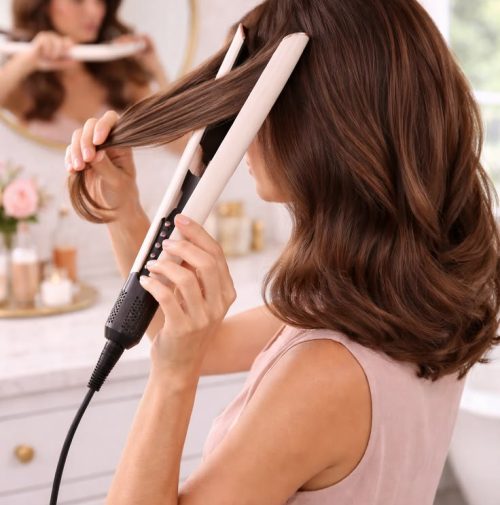
Flat Iron (Straightening/Curling): A flat iron with adjustable temperature is a must. Cheap irons can damage hair; invest in a quality one. Irons come with ceramic or titanium plates (ceramic is gentler, good for fine or damaged hair; titanium heats faster, ideal for thick/coarse hair). The plate width matters: ~1″ plates (e.g. T3 Lucea, ~$190) work for most styles; a wider plate can do longer sections for volume, a narrower plate better for tight curl detail. Many pros favor brands like T3, GHD, or BaBylissPRO. For example, Glamour’s experts found the T3 Lucea Iron ($190) top overall and GHD Chronos ($360) best for thick hair.
Straightening Technique: Once hair is fully dry, work in 1–2″ sections. Clamp the flat iron at the root, then glide it slowly down the strand to the ends, keeping constant motion to prevent lines or heat spots. Don’t press too hard—let the iron’s weight do the work. For extra sleekness, you can sandwich a fine-tooth comb just ahead of the iron (comb-through technique). If you want a subtle bend at the end, slightly angle or twist the iron as you reach the tips. Always finish a straightening pass with a cool-down (blast with cold air on the section) to set the style.
Curling with a Flat Iron: You can also curl with a flat iron. The Kenra guide notes: “Clamp at the root and pull down; when you reach where you want the curl to start, rotate the iron 180° away from your face and pull straight down”. A full 360° twist before pulling yields a spiral; a partial twist yields waves. Keep the iron moving to avoid kinks. This method is handy if you don’t have a curling iron, but always remember to use a heat protectant first.
Curling Iron or Wand: For classic curls, a curling iron with a clamp (Barrel: 1″ for tighter curls, 1.25–2″ for waves) is ideal. Professional stylists often keep both clamp irons (with ceramic or tourmaline barrels) and clipless wands on hand. A 2026 test crowned the Hot Tools Pro Artist 24K Gold Long Curling Iron (~6″ barrel, ~$56) as Best Overall, noting its long-lasting, heat-controlled curls. For thick or long hair needing soft, long-lasting curls, Glamour loved the Bio Ionic Long-Barrel Styler ($163) for its 8″ barrel. If you prefer a wand (no clamp), brands like T3 and Beachwaver are also excellent.
Curling Techniques: Always spritz each section with heat protectant. The Sam Villa method suggests flat-wrapping for volume: hold hair flat against the barrel without twisting it, wrap the section fully around, and do not curl the last 2″ to avoid a doughnut end. For tighter spirals, twist a small section then wrap it from root to tip. For beachy waves (“lazy curl”), wrap halfway in one direction, then switch directions for the rest, leaving the ends out. After curling each piece, pin the curl up (in the clipped-up position) until it cools to set the shape. Allow all curls to cool completely before finger-combing or brushing out.
Hot Rollers: Heated rollers give big volume with lower heat exposure. Use foam or velour hot rollers on clean, slightly damp hair. Section hair and roll each section (directed toward the scalp), securing with pins. For loose waves on longer hair, use larger rollers; for tighter curls or shorter hair, use smaller ones. Let them cool fully (10–15 minutes). Remove gently, shake out curls, and finger-style. The low, even heat of hot rollers is very gentle – no specific brand was cited, but popular sets include Conair, T3, or Remington. Always apply heat protectant beforehand. Hot rollers are especially gentle and can often be done on second-day hair (with dry shampoo prepped).
6. Finishing Products & Application Order
After styling, finish for hold and shine: First, smooth frizz and seal moisture. Apply a pea-sized dab of finishing cream or oil to mid-lengths and ends only (avoid roots). Oil (argan, coconut) or silicone serums add instant gloss – e.g. Moroccanoil Treatment ($25) or a drop of olive/coconut oil. Frizz-prone hair can use a silicone serum like Macadamia Oil or Paul Mitchell’s Super Skinny Serum. Then, lightly spray hairspray for hold (choose light or flexible hold for everyday, stronger hold for events). Kenra’s Volume Spray 25 is popular with stylists for long-lasting hold without crunch. Apply hairspray 8–10” away in short bursts, focusing at roots or on lifted sections for volume. (A pro tip: use a light dry shampoo at roots after styling to absorb stray oil and add lift.)
If you’ve curled or waved hair, run fingers or a wide-tooth comb through to break up any stiffness before spraying. For extra polish, run a cool blow-dryer blast over styled hair once done to settle any flyaways and lock the style. For special shine, a glassy finish spray (shine mist) can be the final touch.
Order of operations: (After hair is fully styled/dried) — 1. Apply smoothing serum/oil on ends. 2. Gently shake out curls/waves with fingers. 3. Mist on flexible-hold hairspray. 4. Optional: finish with shine spray or frizz-control spray on top layer.